THE SCIENCE OF HOW TO OPTIMIZE YOUR SLEEP

A MASTERCLASS ON REM SLEEP
We sometimes forget that rest is a performance metric. And when it comes to restorative sleep, REM—Rapid Eye Movement sleep—is essential. REM sleep isn’t just about dreaming. REM sleep is when your brain consolidates emotional memories, strengthens neural pathways for motor skills, and processes complex problem-solving.
It’s also when your body undergoes critical restoration—both men and women experience testosterone secretion pulses during sleep, with levels peaking in the early morning hours that coincide with REM-rich sleep cycles. Your immune system strengthens. Stress hormones regulate.
For healthy adults, REM comprises 20-25% of total sleep, which means even modest improvements in this phase yield disproportionate returns for cognitive performance, emotional stability, and physical recovery.
You may then be asking, “How do I get more REM sleep?” Here, research has taught us that light, temperature, timing, and chemistry all determine your REM sleep quantity and quality.
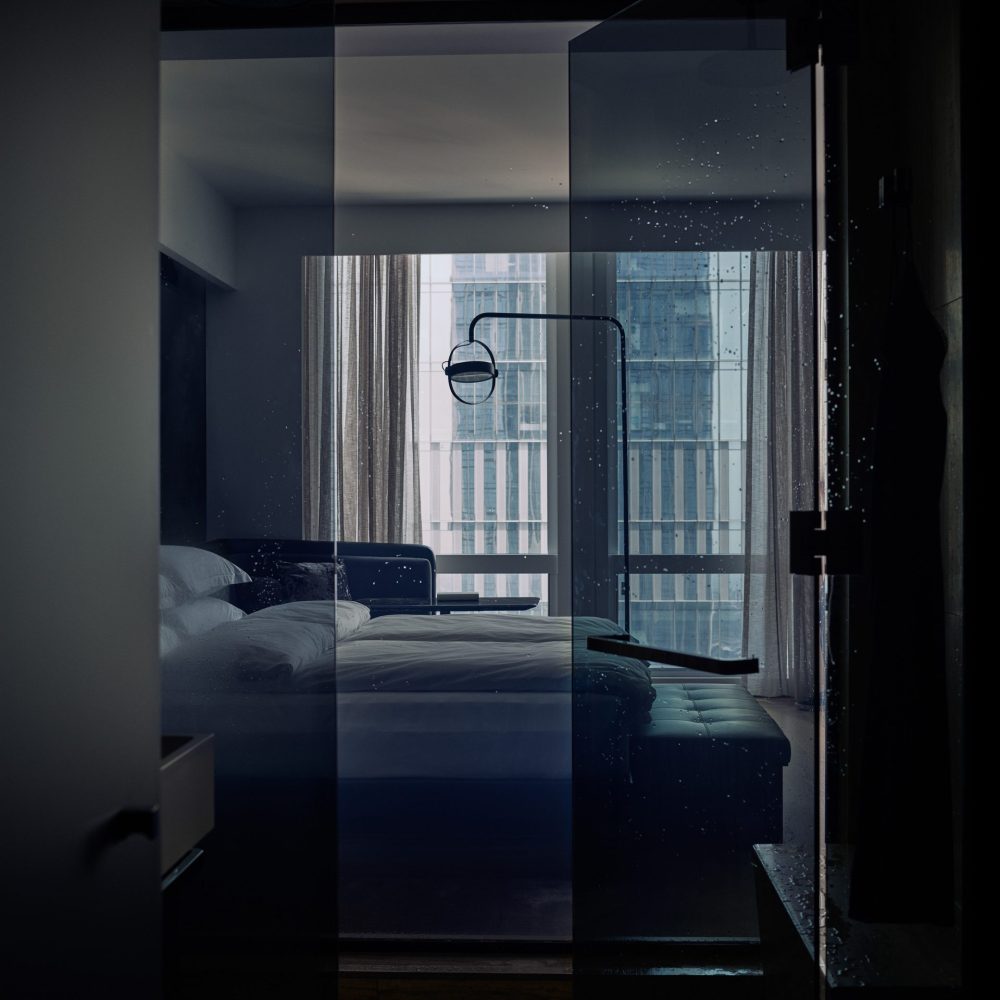

Start with light. Your eyes are the entry point for the circadian system, and the color and brightness of light in the hours before bed set the tone for the night. Blue wavelengths—the kind emitted by phones, tablets, and ceiling LEDs—tell the brain it’s still daytime, delaying melatonin release and suppressing REM. When Norwegian researchers replaced bright, blue-rich light with dim amber light at about 30 lux and 2,200 Kelvin, participants extended their REM from 76 to 90 minutes, an 18-percent gain, and cut REM arousals by one-third. The takeaway is simple: in the two hours before bed, switch to warm, dim lighting. Table lamps beat overhead LEDs, and amber bulbs beat white ones.
Next is temperature. During REM, your body’s internal thermostat goes offline. You stop actively regulating heat, which makes REM more vulnerable to small changes in room temperature. Studies show REM can increase significantly as the environment warms from around 64-67°F in the early part of the night (which helps boost deep NREM sleep), to beyond 74-76°F — warm enough for thermoneutrality and REM increase. Think of this as creating an effortless equilibrium where the body neither sweats nor shivers. That stability lets REM unfold uninterrupted. If you have a smart thermostat at home, you can try to program exactly this thermal curve of cool in the first half of the night, and in the last 2 hours before your wakeup time, start to raise the temperature back up.
Timing is the other half of the equation. REM sleep clusters toward the end of the night. Early cycles may contain only a few minutes, but by the fourth or fifth cycle, the stage can stretch to forty minutes or more. Trim your sleep by even half an hour, and you’re cutting directly into that high-value final phase. Classic research now well replicated shows that sleeping just fifteen to thirty minutes longer can add ten to thirty minutes of additional REM. That difference is often the gap between waking up merely rested and waking up emotionally reset.
So far, we’ve spoken about things to do or do more of. However, there are also things to avoid if your goal is to optimize REM sleep. Two familiar substances can undo that progress overnight. Alcohol, though it makes people drowsy, is a REM suppressant. A meta-analysis, which is a method that assesses all studies to date on a particular topic for the most powerful insights, found that alcohol reduced REM by between 3-7 percentage points. That may not seem like much, but it is a relatively marked and substantial loss when you remember that optimal REM occupies only 20–25 percent of sleep. The sedative effect of alcohol in the first half of the night fragments REM later, leading to restless dreams and shallow morning sleep.
Cannabis compounds such as THC and CBD also disturb REM architecture. In one controlled study, bedtime use shortened total REM by about thirty-four minutes and delayed its onset by more than an hour. After two weeks of abstinence, REM returned to normal and dreams became vivid again—a clear sign of rebound, and a clear sign that the brain had been deprived and starved of the REM sleep it so clearly needs each night. That is, the short-term calm many people feel after cannabis comes at the long-term expense of sleep quality.
Together, these findings draw a consistent picture. The environment and chemistry you bring into the evening either protect or erode REM. You don’t need expensive trackers or supplements. You need warm light, a cool room, enough time in bed, and an unaltered brain. When those conditions align, REM sleep deepens naturally. And when it does, you wake up more emotionally balanced, sharper, and ready to learn again—proof that the quality of your REM sleep shapes the quality of your waking life. A powerful performance metric of rest.
Related articles

THANKSGIVING REIMAGINED
WHY EQUINOX HOTELS IS MORE THAN JUST A “WELLNESS” BRAND

THE BEST MUSICALS AND PLAYS IN NYC

SPRING IN NYC 2026: MOVEMENT, RENEWAL, AND ELEVATED ENERGY